Vintage Christmas Trees Background Illustrations
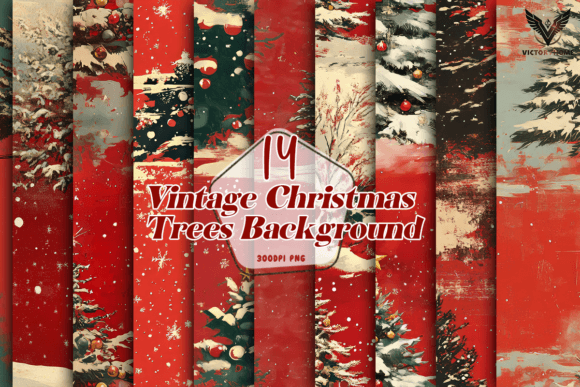
As a brand designer who spends half my life tweaking kerning and the other half worrying about print bleed, I don’t just look at design assets; I evaluate their potential to build a business. When I first pulled up Vintage Christmas Trees Background, I didn’t see just a pretty picture. I saw a cohesive visual system waiting to be deployed. The moment those textured pine branches and nostalgic holiday motifs loaded onto my screen, the mood shifted from chaotic brainstorming to focused execution. It felt less like generic clipart and more like a curated collection of Illustrations that carry weight, history, and warmth.
The immediate impression is one of rustic elegance. This isn’t the bright, neon-lit, mass-produced aesthetic often found in big-box store aisles. Instead, it leans into a softer, more organic narrative. The textures suggest aged paper, muted earth tones, and hand-drawn imperfections that scream "handmade." For a local business owner—whether you run a boutique candle shop, an artisanal bakery, or a small-batch skincare line—this asset immediately signals authenticity. It suggests a brand personality that is friendly, festive, and deeply rooted in tradition. It fits perfectly with businesses that want to convey trust, craftsmanship, and seasonal joy without feeling cheap or overly commercial.
From Screen to Shelf: Real-World Packaging Applications
In my recent project for a local family-owned bakery, we were struggling to differentiate their holiday cookie tins from the sea of generic red-and-green competitors. We needed something that felt premium but approachable. That is where this graphic design asset became indispensable. By integrating these vintage tree motifs into our packaging design, we created a strong first impression that lasted long after the box was opened.
Think about the tangible touchpoints of a small business. Every label, hang tag, and thank-you card is a chance to reinforce your brand identity. Using Vintage Christmas Trees Background allows you to create consistent visual language across all physical products. Imagine wrapping your handmade soaps in kraft paper adorned with these delicate, vintage-style branches. Or using the motif as a border on your product labels for jam, honey, or specialty teas. The asset provides a decorative frame that draws the eye to your logo and product name, enhancing visual hierarchy without overpowering the essential information.
For food businesses specifically, this style works wonders because it evokes nostalgia. People associate vintage aesthetics with homemade quality and safety. When a customer sees a label decorated with these classic trees, their brain subconsciously connects it to grandma’s kitchen or a cozy cabin retreat. This emotional connection is priceless for building customer loyalty. It transforms a simple commodity into a gift-worthy item, which is crucial for seasonal campaign visuals and holiday sales spikes.
Expanding Beyond Physical Goods: Digital and Promotional Use
While packaging is obvious, the versatility of these Illustrations extends far beyond the shelf. In today’s omnichannel market, your social media graphics need to match the quality of your physical products. A mismatch between your Instagram feed and your product box creates cognitive dissonance for the consumer. By using the same vintage tree elements in your website banners, email headers, and promotional ads, you create a unified brand experience.
Consider a local florist launching a holiday wreath collection. They could use the background asset to create digital flyers for local community boards or as a backdrop for their online store’s homepage. The texture adds depth to flat screens, making the content feel more tactile and inviting. Similarly, for a boutique clothing store, these assets can be used on thank-you cards included in shipping packages. A handwritten note on a card featuring subtle vintage botanicals feels significantly more personal and expensive than a plain white slip of paper. It elevates the unboxing experience, turning a routine delivery into a memorable event.
Furthermore, this asset supports better marketing visuals by providing a ready-made composition. Small business owners are often wearing too many hats; they don’t have time to hire a full-time art director. Having a high-quality, versatile design asset means they can quickly assemble professional-looking materials. Whether it’s a price list for a holiday market booth or a poster for a pop-up shop, the pre-designed elements ensure that the final output looks polished and intentional. This consistency builds customer trust, as consumers perceive brands with coherent visual identities as more reliable and established.
Strategic Placement and Design Caution
However, every designer knows that just because you can use an asset everywhere, doesn’t mean you should. Vintage Christmas Trees Background is decorative, and decoration must never compete with communication. There are specific scenarios where this asset should be used with extreme care.
Avoid placing these intricate patterns directly behind critical text such as ingredient lists, nutritional facts, or legal disclaimers. If the visual noise is too high, readability suffers, and you risk non-compliance with labeling regulations. Similarly, for very small labels, such as those on tiny perfume bottles or spice jars, the detail might get lost or become muddy when scaled down. In these cases, consider isolating a single tree branch or a simplified icon derived from the main asset rather than using the full background.
Also, be mindful of your overall brand aesthetic. If you are a luxury minimalist brand focused on stark whites and clean lines, this vintage, textured asset might clash with your desired image. It is better suited for brands that embrace warmth, texture, and a slightly romantic or rustic vibe. Do not force it into a corporate tech environment or a formal financial service context; the mood simply won’t align. Additionally, ensure you test the asset on low-contrast backgrounds. Vintage colors often rely on subtle variations in tone, which can disappear if printed on dark or overly saturated papers.
Practical Designer Notes for Implementation
Before slapping this asset onto your next project, follow these practical steps to ensure professional results:
- Test on Mockups: Never judge a design asset in isolation. Place it on real-world product mockups. See how it looks wrapped around a jar, folded on a bag, or printed on a cardstock texture.
- Check File Formats: Verify if you have access to vector formats (like SVG) or high-resolution PNGs with transparency. Vector files allow you to scale the trees infinitely without pixelation, which is crucial for large-format printing like banners or posters.
- Font Pairing: Experiment with typography. These vintage illustrations pair beautifully with serif fonts for a classic look, or script/handwritten fonts for a personal touch. Avoid overly modern, geometric sans-serifs unless you are aiming for a deliberate eclectic contrast.
- Color Adaptation: Don’t be afraid to recolor the asset. If your brand palette is navy and gold, adjust the greens and browns of the trees to fit. This ensures the asset feels bespoke to your brand rather than off-the-shelf.
- Commercial Licensing: Most importantly, confirm the commercial license. Ensure you are allowed to use these Illustrations for physical product sales and client work. Some creative marketplace licenses restrict usage to digital-only projects, which would limit your ability to use them on packaging.
In conclusion, Vintage Christmas Trees Background is more than just a decorative element; it is a strategic tool for small business branding. When used thoughtfully, it enhances product recognition, strengthens emotional connections, and elevates the perceived value of your offerings. For any local entrepreneur looking to make a lasting impression this holiday season, this asset provides the perfect foundation for a cohesive, professional, and heartfelt brand presentation.